
Treating Contused Toenails in Midlothian, VA
August 27, 2026
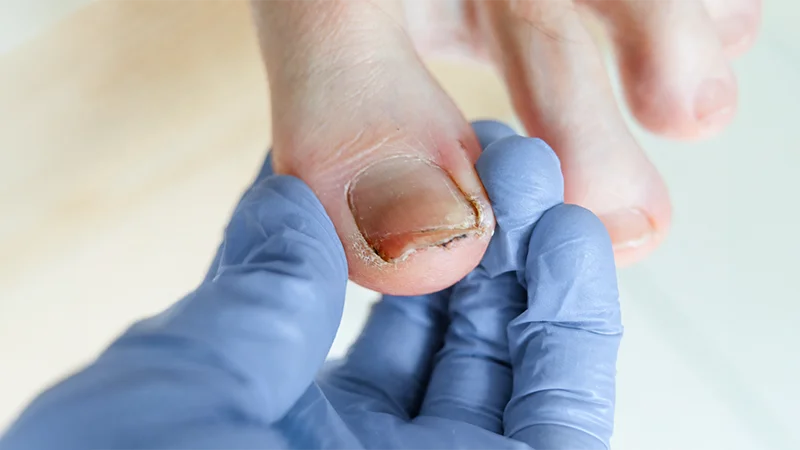
Have you ever looked down at your foot and wondered why your toenail looks thicker than the rest? Perhaps you notice more ridges or lines, or maybe even a purple discoloration. A toenail that gradually becomes thicker, ridged, discolored, or difficult to trim can be uncomfortable, frustrating, and lower your self-confidence. You may also notice that the nail loosens or falls off as a new nail begins to grow beneath it.
While these changes may feel concerning, one possible cause is a contused toenail, which can develop when an injury or repeated pressure damages the nail and surrounding tissues. Over time, this trauma may disrupt normal nail growth and lead to traumatic toenail dystrophy, causing the nail to become thicker, ridged, discolored, distorted, or partially detached. Because fungal infections and other nail conditions can look similar, an evaluation can help determine the cause of the change.
At SynergyHealth Foot & Ankle, our team of podiatrists takes a whole-patient approach to podiatry. Our podiatrists can help determine what is affecting the nail and develop a personalized treatment plan to address both the symptoms and the underlying cause of your toenail changes.
What is a Contused Toenail & How Can It Lead to Toenail Dystrophy?
A contused toenail develops when trauma injures the nail or the tissues beneath it. Sometimes the injury is easy to identify, such as dropping a heavy object on the toe, stubbing it, or sustaining a sports-related impact. In other cases, the damage develops gradually through repeated microtrauma, such as ill-fitting shoes. Toe alignment, gait, and foot structure can also cause persistent microtrauma that affects the toenails, especially if you are on your feet for a large portion of the day or are an endurance athlete.
When trauma damages the nail matrix, new growth can become uneven or distorted. Injury to the nail bed can also cause bruising, bleeding, tenderness, separation, or changes in how the nail attaches as it grows. This can result in the nail growing thicker, developing ridges or lines, turning purple or dark from bleeding beneath the surface, or lifting away from the nail bed. In some cases, the damaged nail loosens or falls off as a replacement nail grows in its place.
When changes in nail growth persist after an injury or repeated pressure, they are often described as traumatic toenail dystrophy. Toenail dystrophy is a general term used to describe changes in a nail's shape, thickness, color, texture, or growth pattern. A dystrophic toenail may become thick, ridged, curved, brittle, discolored, partially detached, or difficult to trim.
Repeated trauma can also create an ongoing cycle. As the nail thickens or changes shape, it may take up more space inside the shoe, leading to additional rubbing, discomfort, and further damage. Over time, the nail can become painful, ingrown, cosmetically concerning, or difficult to manage.
Symptoms of a Contused Toenail and Traumatic Toenail Dystrophy
As the nail responds to repeated irritation, it may become:
- Thicker, harder, or more difficult to cut
- Ridged, uneven, or curved
- Purple, red, brown, or dark after bleeding beneath the nail
- Partially separated from the nail bed
- Tender when pressed by a shoe
- More likely to irritate the surrounding skin or become ingrown
- Loose or likely to fall off while a new nail is growing underneath
Diagnosing the Cause of a Contused Toenail
While nail dystrophy describes a change in the nail's texture or structure, it does not automatically stem from trauma. In certain cases, similar changes in your toenail can be caused by a fungal infection, psoriasis, inflammatory conditions, congenital nail abnormalities, and, less commonly, abnormal growths.
Although foot trauma can cause both a contused toenail and longer-term nail dystrophy, it can be hard to determine the exact cause from visual examination alone, which is why it is important to have your toenail evaluated by a medical professional. During your appointment, our care team may consider:
- How and when the nail began changing
- Previous injuries or repeated pressure
- Toe position, foot structure, and walking mechanics
- Work, exercise, and footwear habits
- Skin changes around the nail
- Circulation, sensation, medications, and broader health history
When a fungal infection or another condition is suspected, your podiatrist may collect a nail sample for additional testing or microscopic examination. This not only ensures you receive proper treatment but also helps you get back on your feet sooner.
At SynergyHealth Foot & Ankle, we evaluate the nail along with the patient's footwear, toe position, foot structure, activities, medical history, and overall health to help identify factors that interfere with normal nail growth. We then create a customized treatment plan based on their needs.
Are you concerned about a thickened or discolored toenail that won't resolve on its own? Take the first steps towards recovery and schedule an appointment with a board-certified podiatrist today!
Contused Toenail & Traumatic Toenail Dystrophy Treatment Options
A toenail problem doesn’t just affect your foot cosmetically. Consistent pain or pressure can change the way you walk and the shoes you wear and limit your exercise or mobility. Patients with diabetes, reduced sensation, or circulation concerns may need additional guidance and monitoring because pressure, skin injuries, or small cuts during trimming can be harder to detect or heal.
If the underlying cause of your toenail dystrophy is determined to be due to trauma, your lifestyle management protocol may include:
- Keeping the nail thin, short, and softened
- Reducing excessive thickness professionally
- Selecting shoes with sufficient toe-box space
- Addressing toe alignment and mechanical pressure
- Monitoring the nail health as new growth slowly replaces damaged tissue
As part of a customizable treatment plan, SynergyHealth Foot & Ankle takes a whole-patient approach to primary podiatric care. We collaborate with primary care providers, dermatologists, neurologists, physical therapists, vascular specialists, and other health professionals when toenail dystrophy may be connected to a broader concern, ensuring that you receive care that is focused not only on the appearance of the nail, but also on comfort, mobility, and overall wellness.
If a toenail is becoming thicker, painful, discolored, difficult to trim, or repeatedly detached, an evaluation can provide clarity. By determining whether trauma, fungus, or another condition is responsible, SynergyHealth Foot & Ankle can help you understand the problem and explore all appropriate treatment options.
When to Schedule an Evaluation for a Contused Toenail
We suggest scheduling an in-person evaluation if:
- Your toenail becomes progressively thicker, more distorted, painful, or difficult to trim
- You experience a loosened toenail, or it falls off
- Your toenail is consistently painful and causes pressure inside your shoes
- Your toenail doesn't respond to adjustments in footwear and home care.
You should seek prompt attention if you notice redness, warmth, swelling, drainage, bleeding, or an open area around the nail. Dark discoloration that appears without a known injury, persists as the nail grows, or changes over time should also be evaluated to rule out other treatable conditions.
Patients with diabetes, poor circulation, neuropathy, or reduced sensation in the feet should be especially cautious about trimming their nails at home, as small cuts or pressure on the area may be harder to detect or monitor.
At SynergyHealth Foot & Ankle, our goal is to provide clarity, reduce discomfort, and stop the cycle of pressure and irritation so you can return to a better quality of life and optimal wellness.
Find the Cause of Your Toenail Changes at SynergyHealth Foot & Ankle
Traumatically damaged toenails aren't just unsightly; they also affect the way you move and impact your quality of life.
SynergyHealth Foot & Ankle takes a comprehensive approach to nail concerns by evaluating the nail itself, as well as your foot structure, toe position, footwear, daily activities, health history, circulation, and overall wellness. Our care team believes in a whole-patient approach, meaning we also coordinate with your primary care provider or other specialists if a more comprehensive treatment plan is needed.
By diagnosing whether trauma, fungus, or another condition is responsible for your toenail dystrophy, SynergyHealth Foot & Ankle can help you understand what is happening and explore holistic treatment options to get you back on track to the healthiest version of you. If you've been struggling with a painful, thickened, or loosened toenail, our experienced podiatrists can help. Take the first steps towards lasting relief today and schedule an appointment with our team for a personalized, whole-patient treatment plan that will have you back on your feet in no time.